

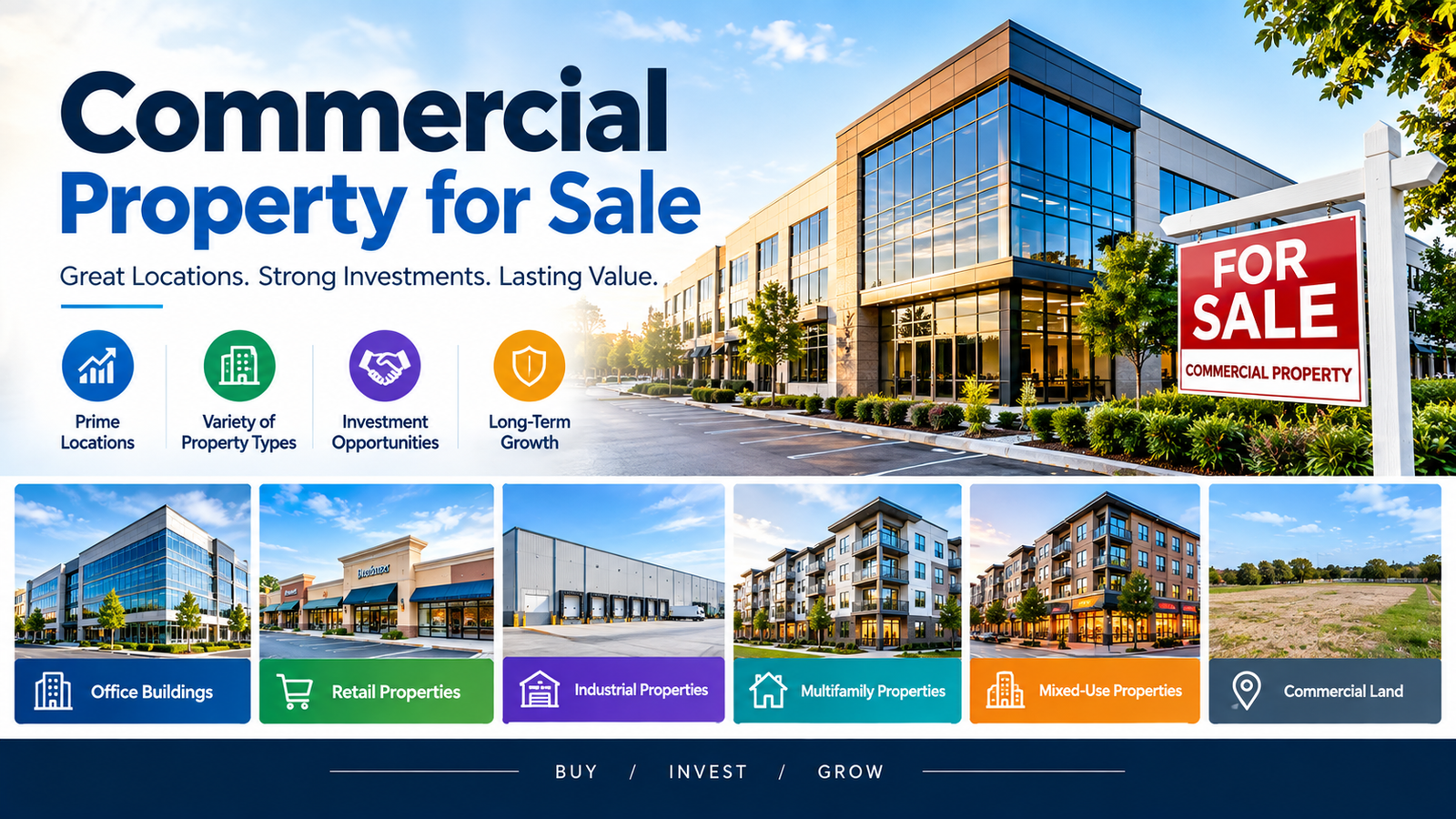
Searching for commercial property for sale can open the door to new business opportunities, rental income, and long-term real estate ownership. However, buying commercial real estate is different from buying a residential property. The location, property type, tenants, operating costs, zoning, financing, and potential income all need to be considered before making a purchase.
Whether you are an investor, business owner, or first-time commercial buyer, understanding the process can help you compare properties more effectively and avoid expensive surprises.
What Is Commercial Property?
Commercial property is real estate primarily used for business or income-producing purposes. Common examples include:
- Office buildings
- Retail stores and shopping centers
- Warehouses
- Industrial properties
- Restaurants
- Medical buildings
- Hotels
- Multifamily properties
- Mixed-use buildings
- Commercial land
Each type of property has different characteristics, operating expenses, tenant requirements, and investment considerations.
For example, a warehouse may depend heavily on transportation access and ceiling height, while a retail property may be more dependent on visibility, parking, traffic, and surrounding businesses.
Why Buy Commercial Property?
There are several reasons buyers search for commercial property for sale.
1. Operate Your Own Business
Business owners may purchase a building instead of leasing space. Ownership can provide greater control over the property and its future use.
2. Generate Rental Income
Investors may purchase commercial buildings and lease space to businesses. Rental income can become an important part of the property’s financial performance.
3. Build a Real Estate Portfolio
Commercial real estate can be one component of a diversified property portfolio. Investors may acquire different property types or properties in different markets according to their investment strategy.
4. Create Long-Term Business Flexibility
Owning a commercial property can give a business greater control over renovations, expansion, signage, operating hours, and other property-related decisions, subject to local regulations and property restrictions.
Types of Commercial Property for Sale
When searching for commercial property for sale, it helps to understand the major categories.
Office Buildings
Office properties range from small professional offices to large corporate buildings. Important considerations include location, parking, building condition, tenant demand, and the flexibility of the floor plan.
Retail Properties
Retail properties include standalone stores, shopping centers, neighborhood retail buildings, and other customer-facing locations.
Visibility, accessibility, parking, surrounding businesses, and local demographics can have a major impact on retail property performance.
Industrial Properties
Industrial real estate can include warehouses, manufacturing facilities, distribution centers, and specialized industrial buildings.
Buyers may need to evaluate loading areas, ceiling heights, power capacity, transportation access, zoning, and building specifications.
Multifamily Properties
Apartment buildings and other multifamily properties are commonly considered commercial real estate once they reach certain size and classification thresholds.
Investors generally evaluate factors such as occupancy, rental income, operating expenses, property condition, and local rental demand.
Mixed-Use Properties
Mixed-use properties combine different uses in one development, such as retail space on the ground floor with offices or residential units above.
These properties can provide multiple income sources but may also involve more complex management and operating requirements.
Commercial Land
Commercial land can be purchased for future development or a specific business purpose. Before purchasing land, buyers should investigate zoning, permitted uses, utilities, road access, environmental considerations, and development restrictions.
How to Find Commercial Property for Sale
Finding the right property requires more than simply searching online listings.
Use Commercial Real Estate Platforms
Online commercial real estate marketplaces allow buyers to search by location, property type, price, size, and other criteria.
Create a shortlist instead of immediately focusing on one property.
Work With a Commercial Real Estate Professional
A commercial real estate broker can help identify properties, arrange tours, explain market information, and assist with negotiations.
A professional familiar with the local market may also know about properties that are not widely advertised.
Contact Property Owners
In some situations, buyers may identify suitable properties and contact owners directly to determine whether they would consider selling.
Explore Local Markets
Driving or walking through commercial districts can reveal properties, development activity, vacant buildings, and business areas that may not be obvious from online searches.
What to Look for When Buying Commercial Property
Price should not be the only factor when evaluating a commercial property.
Location
Location can influence tenant demand, customer traffic, employee access, transportation, visibility, and future property value.
Consider:
- Nearby businesses
- Population and demographics
- Traffic patterns
- Public transportation
- Parking
- Major roads
- Competition
- Planned developments
Property Condition
Inspect the building carefully. Important areas can include:
- Roof
- HVAC systems
- Electrical systems
- Plumbing
- Structural components
- Windows and doors
- Parking areas
- Fire and safety systems
A professional inspection can identify problems that may not be visible during an initial property tour.
Current Tenants
If the property is already occupied, review the tenant situation carefully.
Look at:
- Lease terms
- Rental rates
- Lease expiration dates
- Security deposits
- Renewal options
- Tenant payment history
- Responsibilities for repairs and maintenance
Existing leases can significantly affect the property’s financial performance.
Income and Expenses
Review the property’s financial records rather than relying solely on the asking price.
Potential expenses may include:
- Property taxes
- Insurance
- Utilities
- Repairs
- Maintenance
- Property management
- Landscaping
- Security
- Vacancy costs
Understanding both income and expenses provides a clearer picture of the property’s financial position.
Understanding Commercial Property Financing
Commercial real estate financing can differ significantly from residential mortgages.
Potential financing sources may include:
- Banks
- Credit unions
- Commercial mortgage lenders
- Private lenders
- Seller financing
- Government-backed small-business financing where eligible
- Investment partnerships
Business owners should discuss financing with qualified lenders before making an offer so they understand their borrowing capacity and likely costs.
For eligible U.S. small businesses, SBA programs can be relevant to certain commercial real estate purchases. The SBA’s 7(a) program can be used for acquiring, refinancing, or improving real estate and buildings, while the 504 program can finance eligible real estate and construction projects subject to its rules.
Commercial Property Due Diligence
Due diligence is one of the most important stages of purchasing commercial real estate.
Before closing, buyers should investigate the property and transaction carefully.
Review the Title
Confirm who owns the property and identify potential liens, easements, restrictions, or other title issues.
Check Zoning
Make sure the property’s current and intended use complies with local zoning requirements. Zoning can affect what type of business can operate at the location and what changes can be made to the property.
The U.S. Small Business Administration also advises business owners to check zoning, licenses, permits, and environmental considerations when purchasing property for a business.
Order Property Inspections
Professional inspections can help identify structural, mechanical, electrical, plumbing, and other issues.
Investigate Environmental Issues
Depending on the property’s history and location, an environmental assessment may be appropriate.
Review Financial Records
Analyze rent rolls, leases, operating statements, tax records, maintenance costs, and other relevant documentation.
Evaluate the Market
Research comparable properties, local rents, vacancy, development plans, business activity, and other market conditions.
How to Compare Commercial Properties
Creating a simple comparison table can make the buying process easier.
Consider comparing:
| Factor | Property A | Property B | Property C |
|---|---|---|---|
| Asking price | — | — | — |
| Property size | — | — | — |
| Lot size | — | — | — |
| Location | — | — | — |
| Current occupancy | — | — | — |
| Rental income | — | — | — |
| Operating expenses | — | — | — |
| Property condition | — | — | — |
| Parking | — | — | — |
| Zoning | — | — | — |
| Financing options | — | — | — |
| Potential improvements | — | — | — |
This approach helps you evaluate properties using the same criteria rather than making a decision based only on photographs or asking price.
Common Mistakes When Buying Commercial Property
Focusing Only on the Purchase Price
A property with a lower purchase price is not automatically less expensive to own.
Repairs, taxes, insurance, vacancies, maintenance, and renovations can substantially affect total ownership costs.
Ignoring Location
A building may look attractive financially but have weak accessibility or limited demand.
Skipping Due Diligence
Skipping inspections, financial analysis, title research, or zoning checks can create serious problems after closing.
Underestimating Repairs
Older commercial buildings may require significant capital improvements. Buyers should understand the property’s current condition before finalizing the transaction.
Assuming Every Tenant Is Reliable
Existing tenants should be evaluated based on their leases, payment history, financial position where available, and remaining lease terms.
Not Planning for Vacancies
Commercial properties can experience periods without tenants. Buyers should consider potential vacancy and leasing costs when evaluating financial performance.
Is Buying Commercial Property Right for You?
Commercial real estate ownership can offer opportunities, but it also involves financial commitments and ongoing responsibilities.
Before purchasing, consider:
- Your available capital
- Financing requirements
- Investment timeline
- Risk tolerance
- Management experience
- Property condition
- Local market conditions
- Expected income
- Potential vacancies
- Future capital expenses
A qualified commercial real estate professional, attorney, accountant, inspector, and lender can each provide expertise during different parts of the process.
Frequently Asked Questions
Where can I find commercial property for sale?
You can search commercial real estate marketplaces, work with commercial brokers, contact property owners, and investigate local business districts for potential opportunities.
What is the best type of commercial property to buy?
There is no single property type that is appropriate for every buyer. Office, retail, industrial, multifamily, mixed-use, and land investments have different characteristics and risks. The right choice depends on your goals, finances, experience, and target market.
How much money do I need to buy commercial property?
The amount required varies by property price, lender requirements, financing structure, property type, and the buyer’s financial situation. Buyers should also budget for closing costs, inspections, professional services, improvements, reserves, and ongoing operating expenses.
Can a small business buy commercial property?
Yes, eligible businesses can purchase commercial real estate, and some may qualify for business financing programs. SBA financing is one potential option for eligible U.S. businesses, subject to program requirements.
What should I check before buying commercial property?
Review the property’s financial records, leases, title, zoning, physical condition, environmental considerations, operating expenses, location, and potential future capital expenditures.
Final Thoughts
Searching for commercial property for sale is only the first step in a successful commercial real estate purchase. The most important work happens when you compare properties, analyze the numbers, investigate the building, understand the local market, and complete thorough due diligence.
Whether you are looking for an office building, retail space, warehouse, multifamily property, mixed-use building, or commercial land, focus on how the property fits your financial and business objectives.
A well-researched purchase can provide a place to operate your business, generate rental income, or become part of a broader real estate portfolio. Take time to investigate the opportunity carefully and seek professional advice where appropriate before committing to a transaction.


